
Apparently, we have an entourage
Apparently, we have an entourage
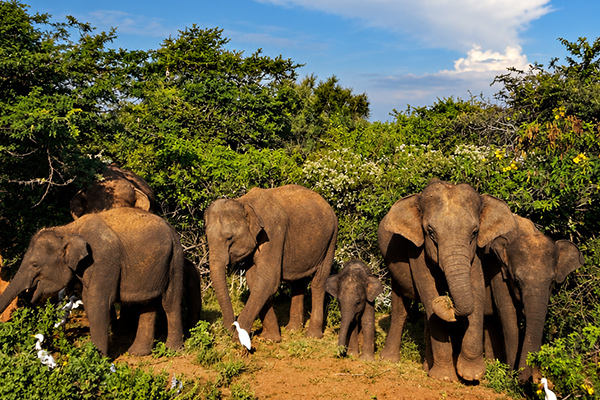
Good morning. Yes, we're aware you're there. You can stop staring now. We get this all the time. Apparently, when a group of elephants walks through the grass, we're expected to attract attention. We're large, we're noisy, we have enormous ears and, frankly, we're not particularly good at hiding. But that's not the interesting part. Look down. See those white birds? Yes. Them. They've been following us all morning. I don't know who invited them. Actually, I do. They invited themselves. Apparently, we are “useful”. You see, when we walk through the grass and vegetation, we disturb insects and other small creatures hiding among the plants. These birds follow along and help themselves to whatever gets stirred up. So we walk... they follow. We disturb the insects. They have breakfast. Quite a convenient arrangement for them. Personally, I don't get much out of it. Well... apart from the company. And perhaps a little free pest control. So I suppose I shouldn't complain.
Cattle Egrets will follow all sorts of large animals, including cattle, buffaloes, rhinos and elephants, because their movements make finding food easier. So perhaps "entourage" is slightly unfair. They're really just taking advantage of a free buffet. Still… We provide the buffet. I think that deserves some recognition.
Fun Facts
You'll also notice there are quite a few of us together today. That's another thing humans sometimes misunderstand about Asian elephants. We don't all wander around on our own. Females and young elephants often travel in social groups, forming surprisingly complex relationships. Groups can come together, separate and regroup depending on circumstances. And yes, the little ones stay close. Someone has to keep an eye on them. They're curious, they wander, and they have an unfortunate habit of investigating things they absolutely shouldn't. Sound familiar? There's another reason you'll find us spending so much time moving through grasslands and forests. We are serious eaters. We can spend around 17 to 19 hours a day feeding, consuming enormous quantities of fresh vegetation in the process. Which, as it turns out, makes us rather useful to our feathered friends. If you're an egret looking for a mobile food service, we're basically open all day. Cattle Egrets are remarkably efficient little opportunists. When they associate with large grazing animals, they can obtain substantially more food while using less energy. In other words, following an elephant can be a very sensible career choice if you're a hungry egret. So the next time you see a group of elephants in Yala National Park, with a collection of white birds wandering around our feet, don't assume they're simply admiring us. They're working. We're working. Everyone has a job. Although, between you and me, I think the egrets got the better deal.
Story of the Photo
Guests staying at Mahoora Tented Safari Camps have the opportunity to see these fascinating interactions during their safaris, where a seemingly simple elephant sighting can reveal an entire little ecosystem unfolding around it. Sometimes, you just have to look beyond the biggest animal in the photograph to discover the rest of the story.
Mahoora tented safari camps Sri Lanka.

Important Links
Resort Locations
Mahoora Tented Safari Camps,
20/63,
Fairfield Garden,
Colombo 08,
Sri Lanka
(10800)