
And here we have a most fascinating creature!
And here we have a most fascinating creature!
A nature documentary about the Black-naped hare is being filmed
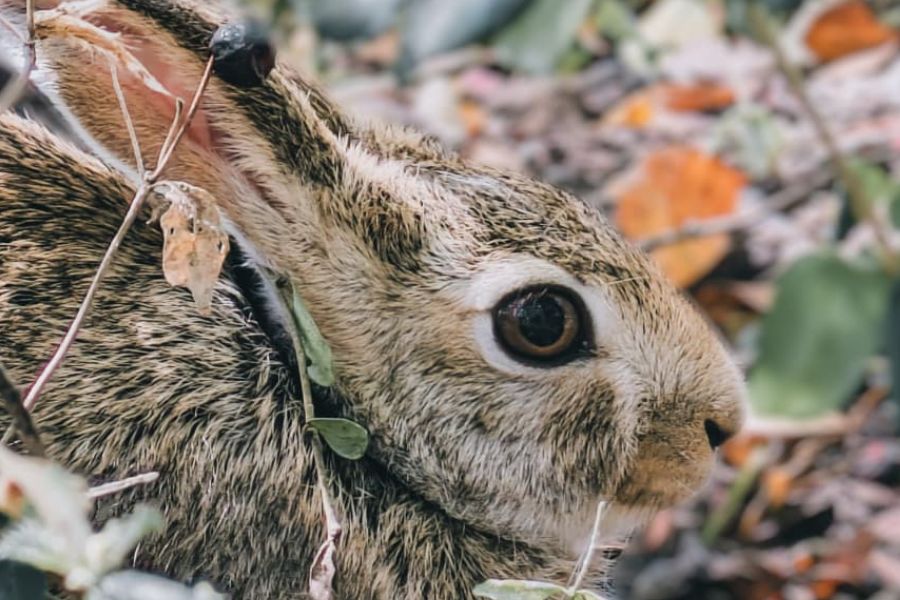
Narrator: If you’ve spent any time in Sri Lanka’s dry zone, particularly in that fleeting window between day and night, you may have witnessed one of its most elusive residents. Not quite seen, not quite missed. A pause in the grass. A sudden blur. Here, in the open scrublands, lives the black-naped hare. A creature of instinct, caution, and remarkable speed.
Hare: “First of all, that was not a blur. That was a controlled, strategic repositioning.”
Narrator: The hare freezes mid-step. One ear tilts towards the unseen voice. The other remains trained on the horizon.
Hare: “Alright… yes… I know you’re talking about me.”
Narrator: The black-naped hare, Lepus nigricollis, is a common yet seldom-observed species across Sri Lanka’s dry zone. Built for survival in open terrain, it relies on its keen senses and powerful hind legs to evade predators.
Hare: “I rely on not being noticed, which, I must say, is going terribly at the moment.”
Narrator: His coat, a blend of black and rufous tones, allows him to blend seamlessly into the dry grasses and scrub. A distinctive darker patch at the back of his neck gives the species its name.
Hare: “Yes, yes, the ‘black-nape’. Very iconic. Big fan favourite, apparently. Would prefer it if it were less… identifiable.”
Narrator: Primarily active during the cooler hours of dawn and dusk, the black-naped hare avoids the intensity of the tropical sun and the peak activity of larger predators.
Hare: “I like to think of it as… smart scheduling. Less traffic. Fewer things trying to eat me.”
Narrator: His long ears pivot constantly, scanning for the faintest hint of danger. Every movement is calculated. Every pause, deliberate.
Hare: “And yet, I feel like I am currently part of a… presentation.”
Narrator: A beat.
Hare: “Who are you talking to?”
Narrator: (continues, unperturbed) When threatened, the hare relies on explosive bursts of speed, zig-zagging unpredictably to escape danger.
Hare: “I will zig-zag. Don’t think I won’t. I’ve zig-zagged out of situations far more stressful than this. Although this is… quite stressful.”
Narrator: Despite its skittish nature, the black-naped hare plays a quiet but important role in the ecosystem, feeding on grasses and tender shoots, subtly shaping the landscape it inhabits.
Hare: “I am contributing. Very quietly. Ideally without commentary.”
Narrator: The light dips lower. The shadows stretch. In these vast plains, survival belongs to those who remain unseen.
Hare: “Exactly!Unseen. That’s the whole point!”
Narrator: A distant rustle. His body stiffens instantly.
Hare: “Oh no. Oh no no no. That could be anything.”
Narrator: In a heartbeat, the tension breaks.
Hare: “Right. I’m leaving. You’ve been… very loud.”
Narrator: And just like that, in a blur that is, in fact, a blur, he vanishes into the grass. In the dry zone, where giants often steal the spotlight, it is the smallest, most anxious voices that tell the most unexpected stories.
Hare: (heard from the grass cover) “Could you kindly leave?”
Fun Facts
Out on Yala National Park’s open plains at dusk, a Black-naped hare paused for a fleeting moment, ears raised and body tense. In the soft light, his coat blended effortlessly into the dry grasses, making him easy to miss unless you looked twice. Ever alert and ready to bolt, this brief encounter was captured by Chanuka Thasan, a Naturalist at Mahoora Tented Safari Camp in Yala, during an evening safari.
Story of the Photo
While staying at the Mahoora Tented Safari Camp in Yala, Gavin David happened to spot this dapper blue gentleman perched just long enough for a photograph. Of course, true to form, the monarch didn’t linger. One quick glance, a soft flick into the air, and he was off on more important business, leaving behind nothing but a hint of blue and a very satisfied photographer
Mahoora tented safari camps Sri Lanka.

Important Links
Resort Locations
Mahoora Tented Safari Camps,
20/63,
Fairfield Garden,
Colombo 08,
Sri Lanka
(10800)