
Behold the tusker!
Behold the tusker!
A naturalist introduces you to a mighty Sri Lankan elephant
(The jeep shuts down the engine, and the naturalist begins to speak in soft, low voice)
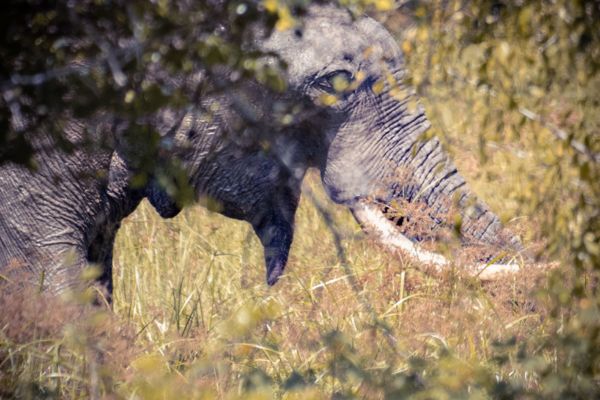
You will start to notice this as you spend a bit of time in Yala. There are elephants you see on almost every drive, and then there are a few that you mostly just hear about. The tusker behind that tree falls into that second group. You can tell from his size and the battle scars on his skin that he is a mature animal. He moves with the confidence of someone who knows very little can threaten him. There is nothing rushed about the way he moves. He knows this area well and is very comfortable here. You may be surprised to learn that true tuskers are actually quite rare in Sri Lanka.
Less than seven percent of wild male elephants grow full tusks, and because of that, the ones you do see are usually big, independent bulls like this who prefer to keep to themselves. Most of the time, you will find them on a solitary wander between the scrub and the open plains, especially early in the morning or later in the evening. Now, if you look closely at his tusks, you can see the wear and tear on them. That comes from years of digging into the ground, stripping bark off trees, and, now and then, having a tussle with younger bulls who think they are ready to be the boss.
Fun Facts
Now, here is something that surprises a lot of people. Not every elephant with something sticking out of its mouth is actually a tusker. Many elephants in Yala, including females, have small protrusions called tushes. They only grow a few inches long and can easily be mistaken for young tusks. True tusks, like his, are much longer, much heavier, and they keep growing throughout the elephant’s life. Another thing to watch for is that most tuskers have a preferred side. Some are right-tusked, some left-tusked, and you will often see them using one more than the other when digging or breaking branches. If you watch him for a few minutes, you can usually tell which tusk does most of the work. And despite their size, they are not mindless chomping machines. They are actually quite careful eaters, picking and choosing what they want rather than just tearing through everything in front of them. You will also notice that bulls like this do not hang around for very long. Unlike the herds you see grazing out in the open grasslands, tuskers tend to appear briefly and then melt back into the bush. Sometimes you get five minutes, sometimes less, and that is often all you are given. Yala is still one of the few places where you have a real chance of seeing one, though it is never guaranteed. That is why, when a tusker like this does appear, it feels less like a routine sighting and more like something you were lucky to be part of.
Story of the Photo
For guests at the Mahoora Tented Safari Camp in Yala, elephant sightings even near the camp premises are not uncommon. Tuskers, however, are far more elusive. Which is why catching a glimpse of this majestic bull moving quietly among the trees of the park felt truly special.
Mahoora Wildlife Updates
Mahoora tented safari camps Sri Lanka.

Important Links
Resort Locations
Mahoora Tented Safari Camps,
20/63,
Fairfield Garden,
Colombo 08,
Sri Lanka
(10800)