
The prehistoric sunbather
The prehistoric sunbather
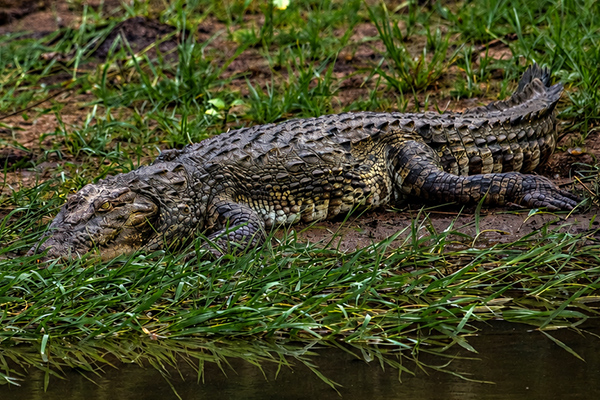
Some animals seem to have somewhere important to be. Elephants march off with purpose. Leopards disappear into the forest as though they've just remembered an appointment. Spotted deer are constantly looking over their shoulders. And then there's the Mugger crocodile… looking utterly blasé about whatever is going on around them. But then, if you're a large, heavily armoured reptile with a powerful tail, an impressive collection of teeth and absolutely nowhere you need to be, why hurry? This particular Mugger appears to have reached exactly that conclusion. Stretched out beside the water, soaking up the sunshine, it looks less like a dangerous predator and more like a prehistoric creature that has discovered the world's most comfortable sun lounger. No frantic movements. No dramatic splashing. Not even the slightest indication that anything particularly interesting is happening. And perhaps that's the whole point.
The Mugger, Crocodylus palustris, is Sri Lanka's freshwater crocodile and is particularly at home in the island's lakes, rivers, marshes, tanks and other slow-moving or still bodies of water. And while lying around in the sunshine may look like laziness, there is actually a very good reason for it. Crocodiles are cold-blooded reptiles, so basking helps them regulate their body temperature. Then there’s the hunting strategy. Why chase your dinner when you can simply wait for dinner to come to you? Muggers are opportunistic predators and will eat a remarkably varied menu, including fish, amphibians, reptiles, birds and mammals. They are classic ambush hunters, capable of remaining almost completely motionless while waiting for an unsuspecting meal to wander within striking distance. Which makes that apparently sleepy crocodile by the water rather more interesting than it first appears. It isn't doing nothing. It's working. Just very, very slowly.
Fun Facts
Mugger crocodiles are surprisingly adaptable. They can live in everything from natural rivers and lakes to man-made tanks and reservoirs, which helps explain why they are such a familiar part of Sri Lanka's dry-zone landscape. They are also quite capable of travelling over land. During dry periods, when familiar pools and waterways begin to dry up, Muggers can travel considerable distances in search of another source of freshwater. So the crocodile you spot beside one waterhole today may not necessarily consider it home tomorrow. It's more of a property portfolio. Their burrowing skills are also equally impressive. Muggers can dig shelters into banks and surrounding ground, providing a cooler refuge when temperatures become extreme. Essentially, they have their own underground retreat, without the need for a mortgage, maintenance fees or a particularly enthusiastic estate agent. When it comes to offspring, despite their fearsome and stoic looks, female crocodiles are very dedicated and caring mothers. During the nesting season, they dig a nest close to the water and lay their eggs before carefully covering them. The temperature inside the nest plays an important role in determining the sex of the hatchlings. Once the young emerge, the mother remains nearby and helps protect them during their vulnerable early months. Despite their reputation for spending long periods looking as though they have absolutely nothing on their schedule, Muggers can be surprisingly active when necessary. They are powerful swimmers, capable predators and perfectly capable of moving considerable distances on land when conditions demand it. So yes, that crocodile beside the water may look as though it has spent the entire afternoon doing precisely nothing. But perhaps that's the secret. When you've perfected the art of patience over millions of years, there really is no reason to rush.
Story of the Photo
There is something wonderfully prehistoric about seeing a Mugger crocodile stretched out beside the water. With its heavily armoured body, powerful tail and broad, ancient-looking head, it could almost be a creature that wandered straight out of another era and simply decided to take a short break. While on safari with guests from the Mahoora Tented Safari Camp in Wilpattu, a Mahoora Naturalist captured this totally chilled out crocodile inside the Park. With its numerous villus and other water bodies, Wilpattu National Park provides an ideal habitat for these remarkable reptiles, allowing them to spend their days doing what they do best: basking in the sunshine, waiting patiently and looking remarkably blasé about the whole affair.
Mahoora tented safari camps Sri Lanka.

Important Links
Resort Locations
Mahoora Tented Safari Camps,
20/63,
Fairfield Garden,
Colombo 08,
Sri Lanka
(10800)